MAMUSTANG ATLASTHE ENTHUSIAST'S REFERENCE

Generation 03 · 1979–1993

THE FOX-BODY ERA

The Fox Mustang became a favorite platform for drivers, racers, and builders. Its long production run includes efficient four-cylinders, the turbocharged SVO, and the familiar fuel-injected 5.0.

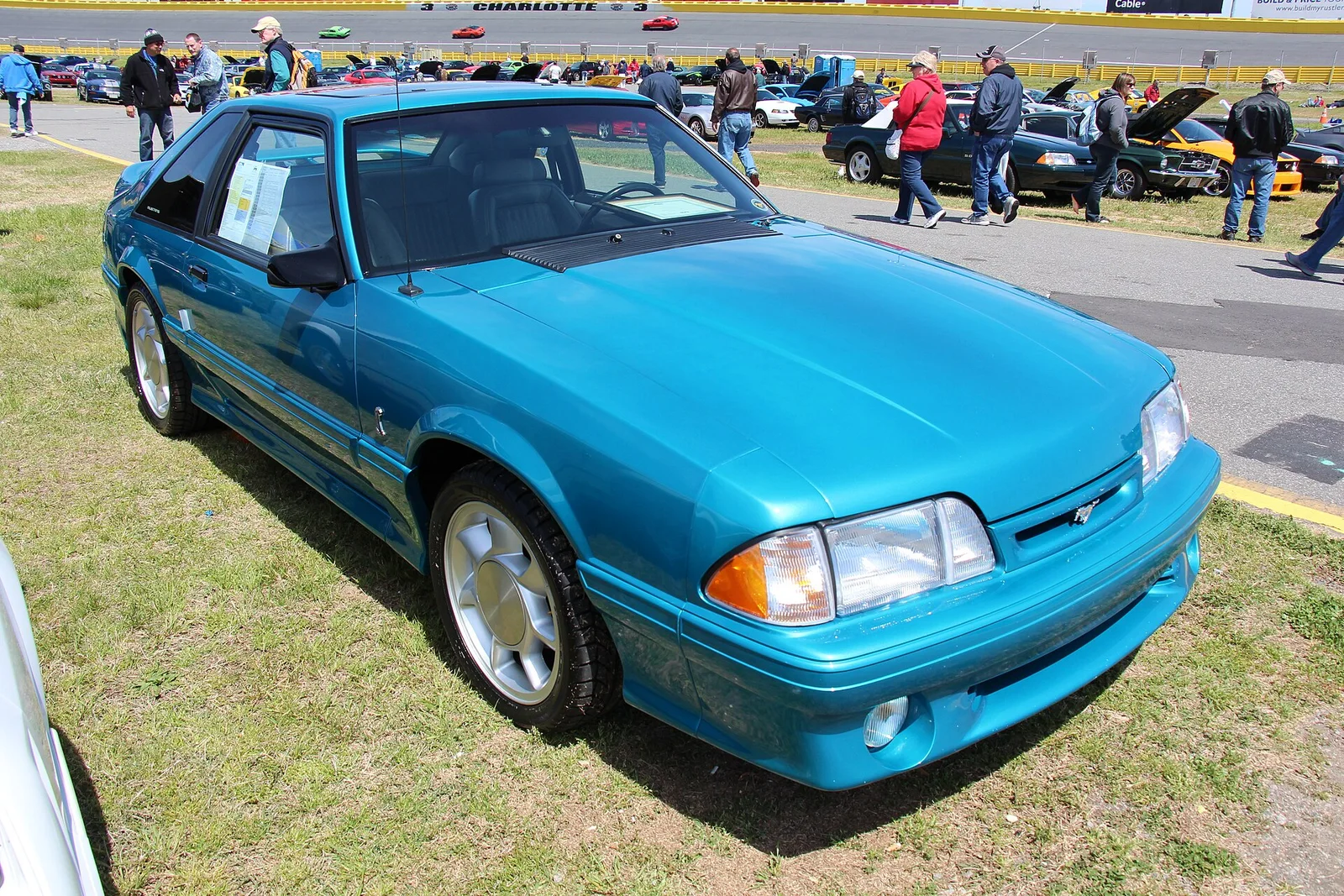
Fox platform representative Mustang photograph

Representative generation photograph. See image identification and credits.

THE CHAPTER IN CONTEXT.

The 1979 redesign replaced Mustang II. The GT returned in 1982, a convertible returned for 1983, and the SVO offered a turbocharged alternative during 1984–86. The 1987 update brought a cleaner nose; SVT closed the era with the 1993 Cobra and Cobra R.

Body styles
Notchback coupe, hatchback, convertible (1983–93)
Engine families across the era
Lima four-cylinder, turbo four-cylinder, inline-six / V6, Windsor V8

BUYING & OWNERSHIP.

Inspect strut towers, floor and torque-box attachment points, evidence of collision repair, and wiring changes. Verify engine swaps, tuning, and emissions equipment before relying on a factory specification.

Use the exact year and configuration when sourcing parts or maintenance instructions. Options, engine swaps, and regional differences can change applicability.

Open the buying checklist →

YEAR BY YEAR.

1979

The Fox begins

A new Fox-platform Mustang replaces Mustang II. Coupe and hatchback shapes establish the proportions of a long-lived enthusiast favorite.

1980

Efficiency in focus

The early Fox range reflects an emphasis on economy. Engine availability differs from the high-output 5.0 formula associated with later Fox cars.

1981

The early Fox develops

The Fox platform continues with several engine choices. Use the model-year brochure and identification codes when assessing an original car.

1982

The GT is back

The GT name returns and renewed V8 emphasis signals a change in direction. This is an important stepping stone toward the later 5.0 era.

1983

Open-air return

The convertible returns to the Mustang range. The Fox platform now serves buyers seeking open-air driving as well as coupe and hatchback practicality.

1984

A turbocharged alternative

The SVO introduces a distinctive turbo-four performance approach, alongside the V8 GT. Its chassis and powertrain parts require model-specific references.

1985

Fox performance matures

GT and SVO offer contrasting interpretations of performance. Carburetion, fuel injection, and transmission applicability must be checked by configuration.

1986

Fuel injection takes hold

The 5.0 adopts sequential electronic fuel injection. The SVO reaches its final model year.

1987

A new face for the Fox

The major styling update introduces smoother front-end treatments. LX and GT remain visually distinct choices on the same basic platform.

1988

The 5.0 following grows

The updated Fox formula continues. Original equipment and modifications should be distinguished when evaluating an enthusiast-owned example.

1989

A mature Fox platform

Coupe, hatchback, and convertible choices continue. The light, adaptable platform is increasingly associated with the 5.0 enthusiast community.

1990

Into a new decade

The Fox generation continues with familiar proportions and evolving equipment. Model-year documentation is the reference for safety and interior details.

1991

Late Fox evolution

The final-era Fox cars retain the familiar LX and GT identities. Verify wheels, trim, and equipment against the original brochure.

1992

The last full stretch

The Fox platform approaches the end of its run. Condition and originality vary widely after decades of modification and restoration.

1993

SVT signs off

The SVT Cobra and Cobra R close the Fox era with distinct performance identities. Cobra hardware and specifications should not be substituted for ordinary GT data.